Flickr Foundation Fellow 2025-26, Oreoluwa Ifamodupe Akinyode, reflects on their research project uncovering hidden connections in the archive, digital performativity in image-making and the value of oral histories of photography. Read on to see Oreoluwa’s final creative output, their artist statement behind the work and what’s coming next.
Threading Ephemeral
Ekimogun, for the ones who dwell in the forest.
Reflections on research as artistic/archival practice
When I first began my research fellowship, I planned to immerse myself deeply in the history, physical trends and threads of textiles encountered across a vast history of ‘West African’ studio photography. Looking back at my introductory blog is now deeply humbling and close to my heart as I see how these initial questions led to even more questions that I am keeping with me: as seeds that will continue to grow into and feed the next phase of this lifelong research of ephemeral, lineage, visual language, language felt in the body, words and wisdom gifted to me by the ephemeral. I look forward to experiencing these questions waiting for me to find them upon the glance of a photo, the touch of a photo, a conversation with an elder and young one. I look forward to the experience of stripping down these questions and getting into the womb/creation point of these questions that are simply waiting for me to find them and for them to find me in the simple passing of time! It is in this process of questioning and finding even more questions from these questions that I am possessed by life and life’s curiosity. The process of questioning and thinking through processes fuels me and all the things I find life giving in my sweet life!
“In this research I will embark on demystifying archival practices, through the invocation of griot traditions, the passing of a story through sound, poetry, and prose with the air that carries these stories from ear to ear.”
Oreoluwa’s Flickr Foundation introductory blog post, July 2025
Reading this quote from the “past” brings me a lot of ease and reminders of the prayers I placed in this fellowship. In my “past” declarations of what I would embark on, I can proudly say that the passing of a story through air, found photographs, the images brought to me via Flickr’s collection, and all of the conversations held within the last 7 months gifted me with the gift of remembrance and action.
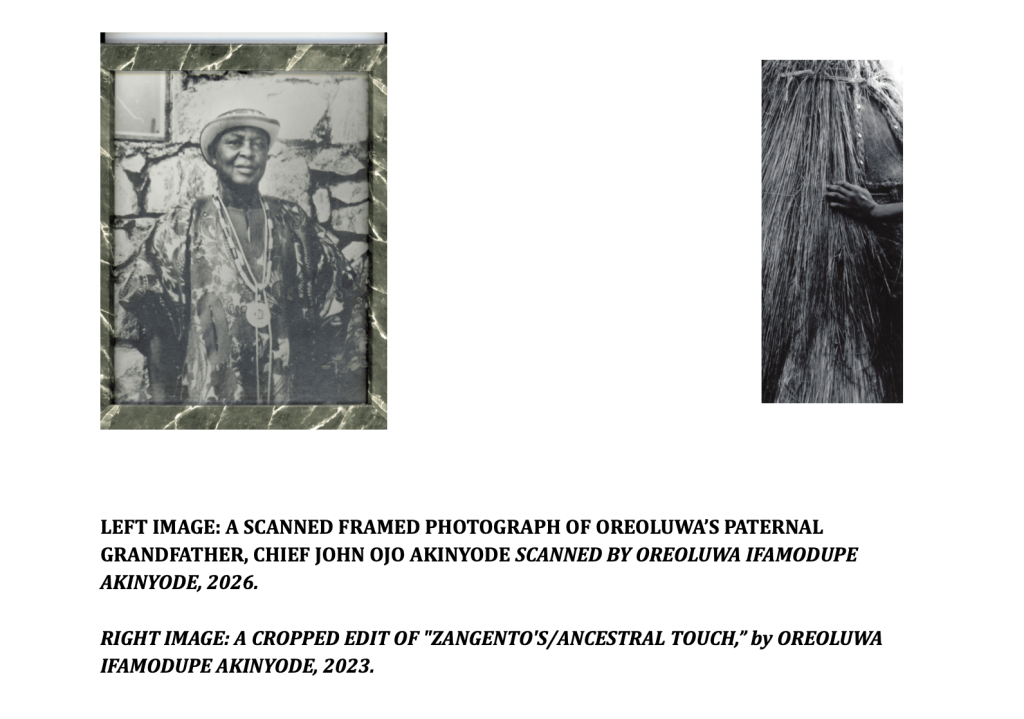
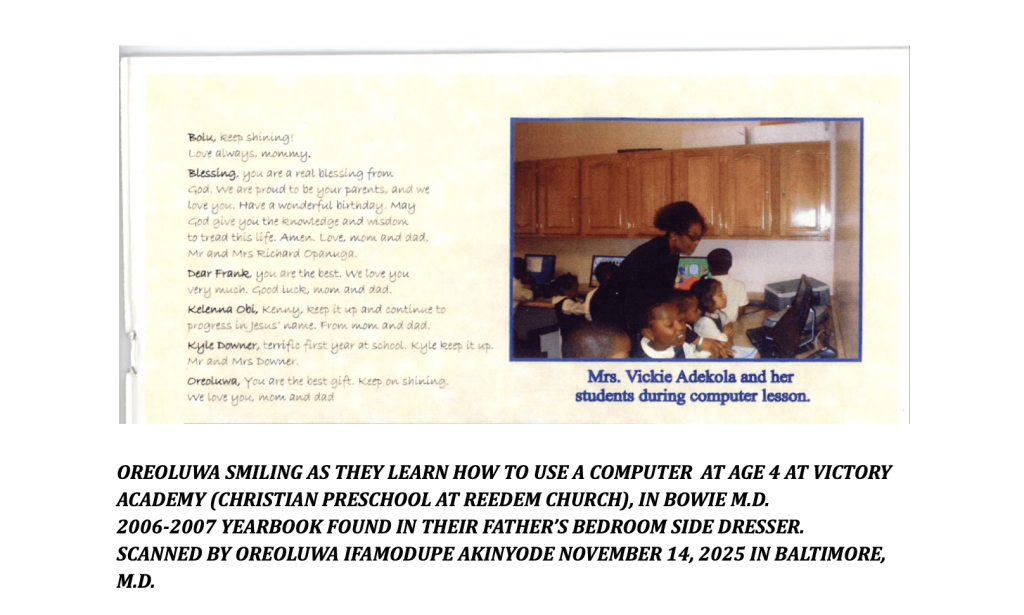
I initially did not want to start my project as a “family archival project.” Avoiding this framing from the jump was a good idea in theory…. As having more broader interests allowed me to find more topics of interest that ultimately fed into me having new eyes to witness the prayers and movements being orchestrated by my ancestors and witnessing them present myself to myself, by guiding me to photographs never seen within my family’s extensive archive across relatives homes. I love them so much for showing me just how much my love for fragments, frames, stories, history, and Sankofa traditions have always been embedded in me.
Fellowship Output: threading ephemeral: act one
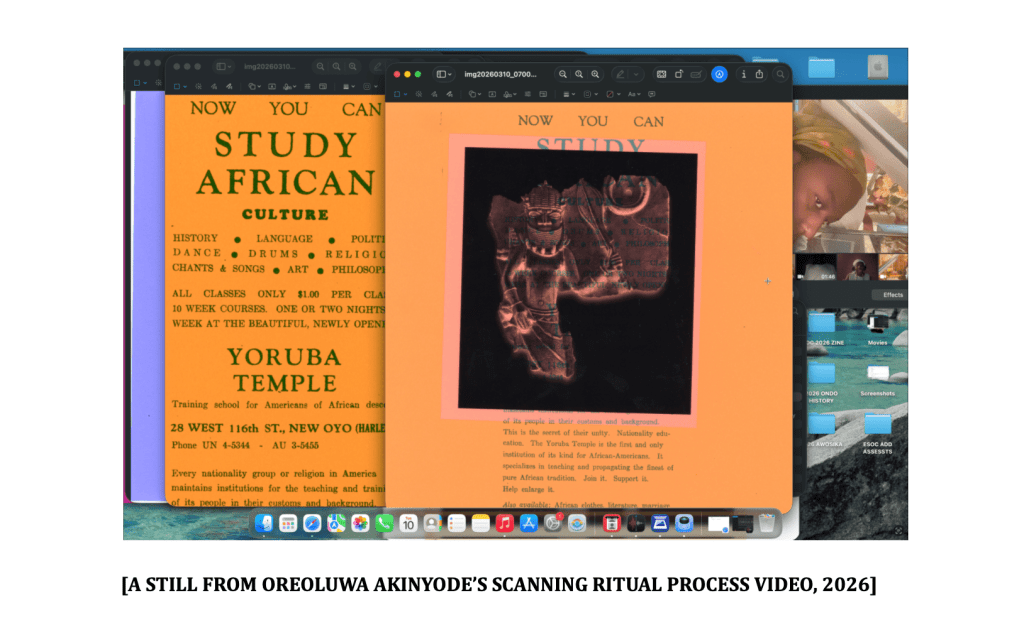
In the short film I created, threading ephemeral: act one, there are two main narrators, my father Bernard Akinyode and Big Daddy Dipo. This piece is a peek inside the many ways research, poetry, print, photo, material and immaterial meet and merge to tell a nonlinear story of the role images and imagemaking have been embedded in my blood.
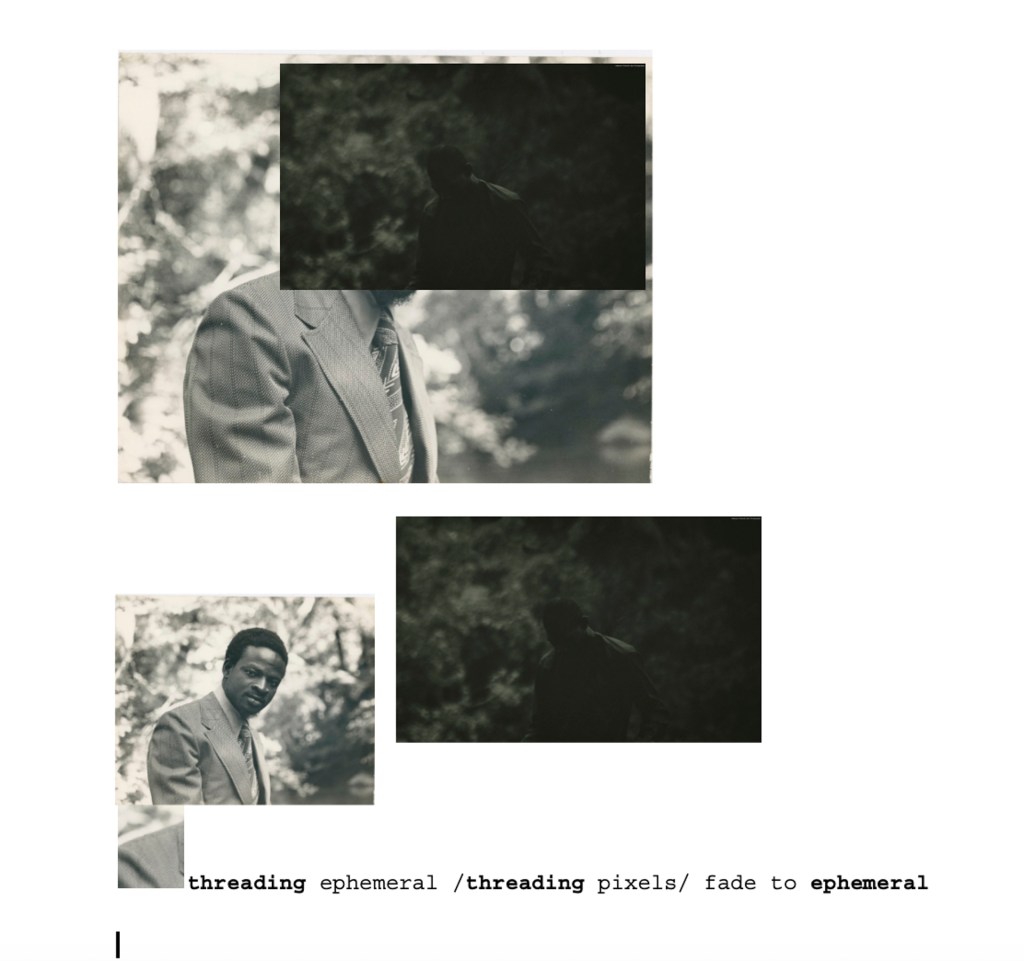
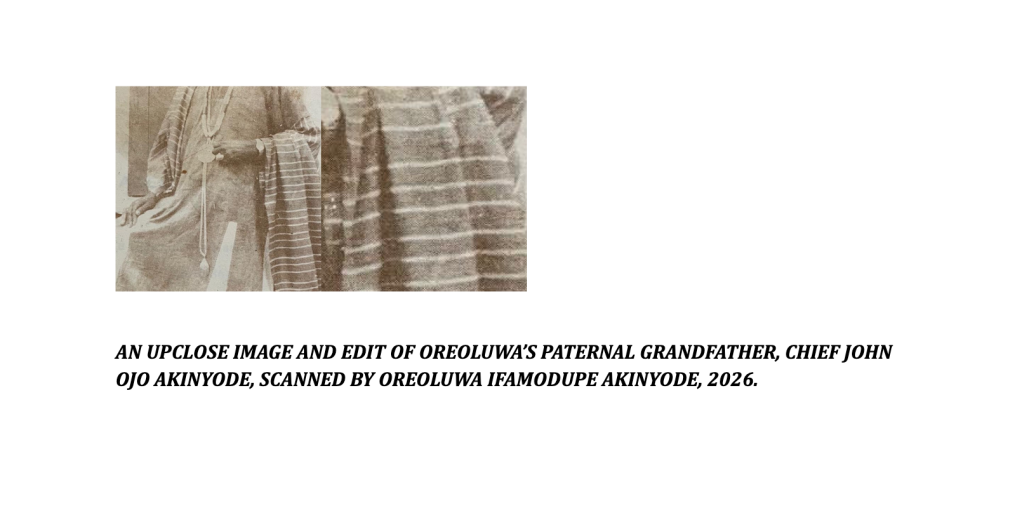
It was important for my father to be the opening narrator as he is one of my favorite storytellers and a frequent star in my work. I give reverence to him deeply in my lineage of becoming an image and filmmaker as he documented much of my family throughout the last 30+ years. Whereas Big Daddy Dipo, who I introduced in the first blog post, is one of my oldest living elders on my mother’s side and fellow image-maker and archivist. In my scanning ritual video, threading ephemeral: act one, my father narrates a story of an ancestor of mine who was significant to photo history in Ondo Nigeria. As he narrates this, scans of my father’s father, Baba John Ojo Akinyode imaged by this special ancestor flash across the screen along with family archives of my father, myself as a baby, my siblings, and mother. Shortly after this introduction by my father, in the piece I ask Big Daddy Dipo to translate one of my father’s favorite songs, Ondo Amanuyi by Dhortune, a song uplifting, honoring, and poetically praising people from Ondo, Nigeria. As this narration continues, I begin scanning materials within my archive: archival risograph prints I made from zine and book clippings from a trip I made to Detroit’s Black Zine Fair in August 2025 (with risograph support from Neta Bomani); images and digital negatives I made from public archives, family archives across the last year, along with scans of my own personal photography and printed work. In this ritual of compilation I am observant of the ways my work, my father’s work, and ancestors’ work have always been speaking with and to each other.
In this observation and curation, I am reminded to continue this conversation with the living and the dead.
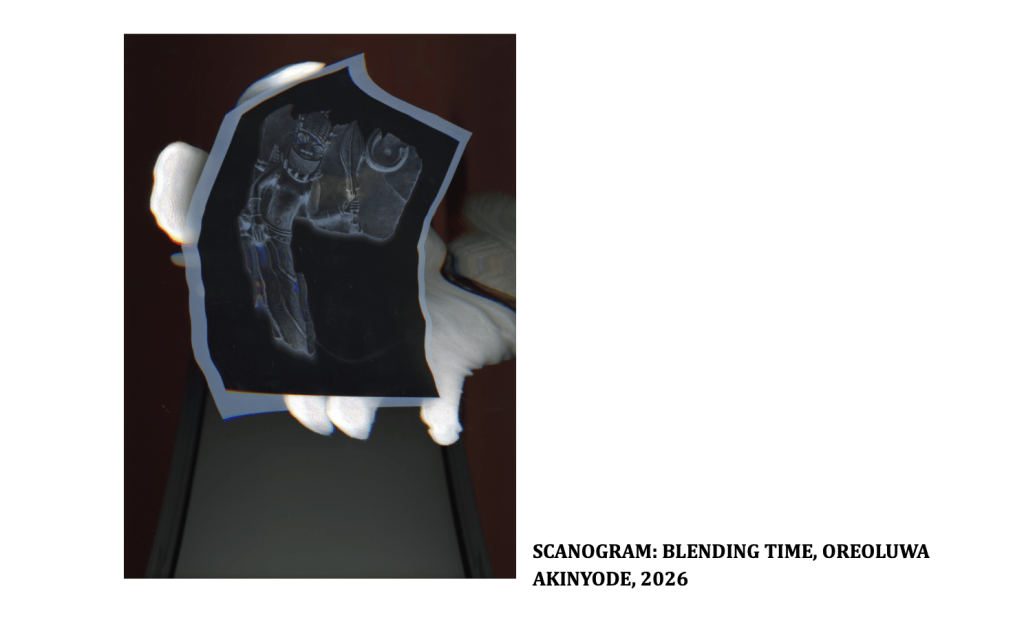
As my ancestors would have it, so much of my work and stewardship is deeply embedded in their trust of me to carry their stories with me and to share within our family. This research fellowship has in fact always been about us/them/us! I quickly learned during my fellowship that zooming into something more regionally-specific and personal would allow me to trace more information connected to ancestral ephemerality. What I did not know was that I would find out just how connected my families on my maternal and paternal side have contributed deeply to my obsession with the past, specifically within archives and image making. Through this restriction of research by location I have concluded this fellowship with even more questions and as a self-appointed ‘curious cat.’ This is deeply pleasing.
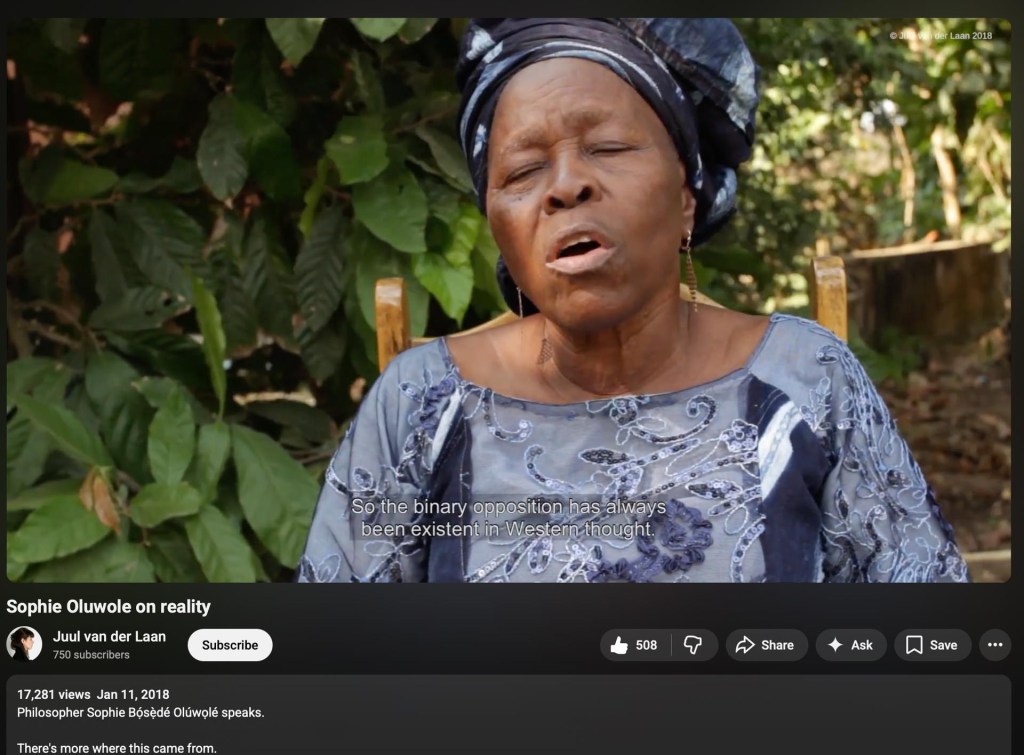
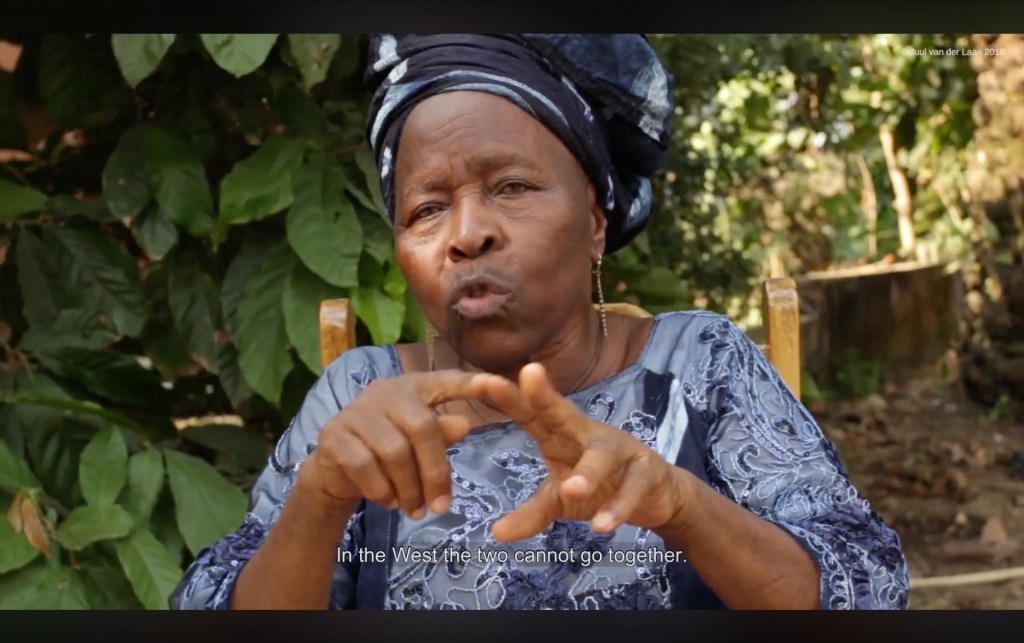
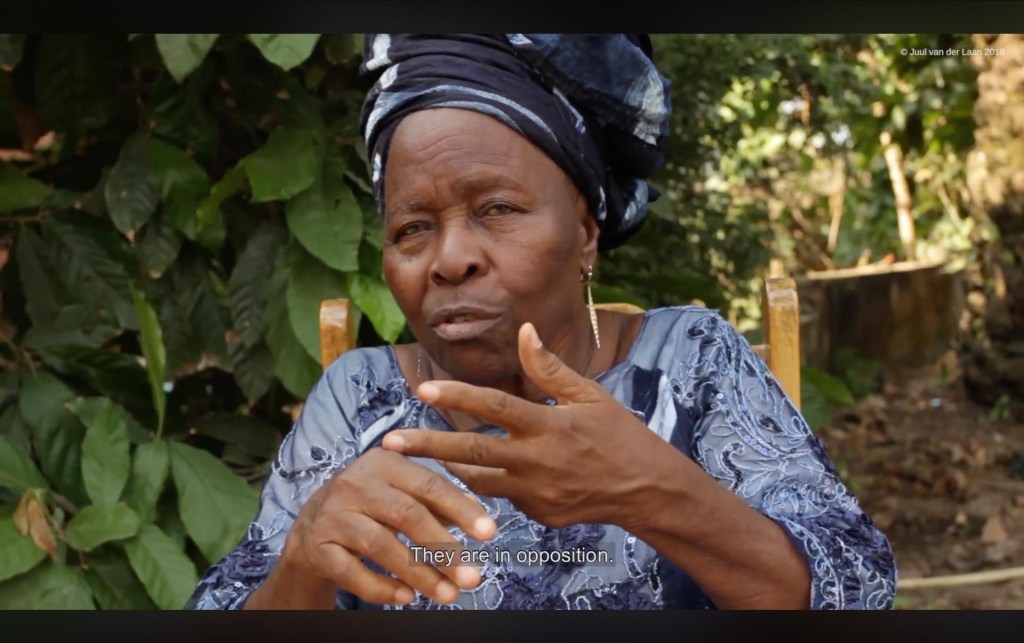
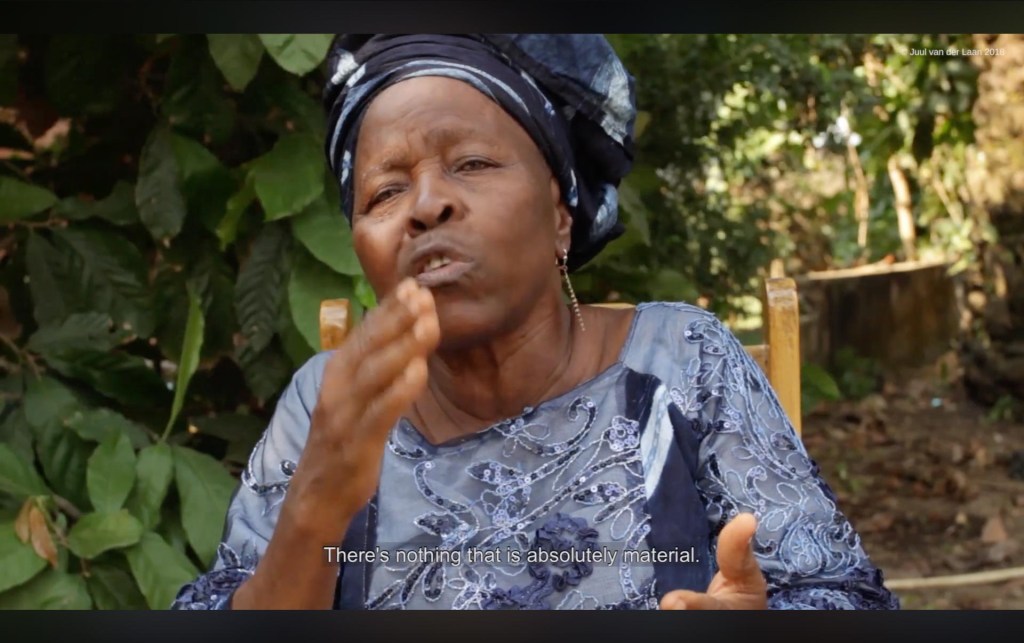
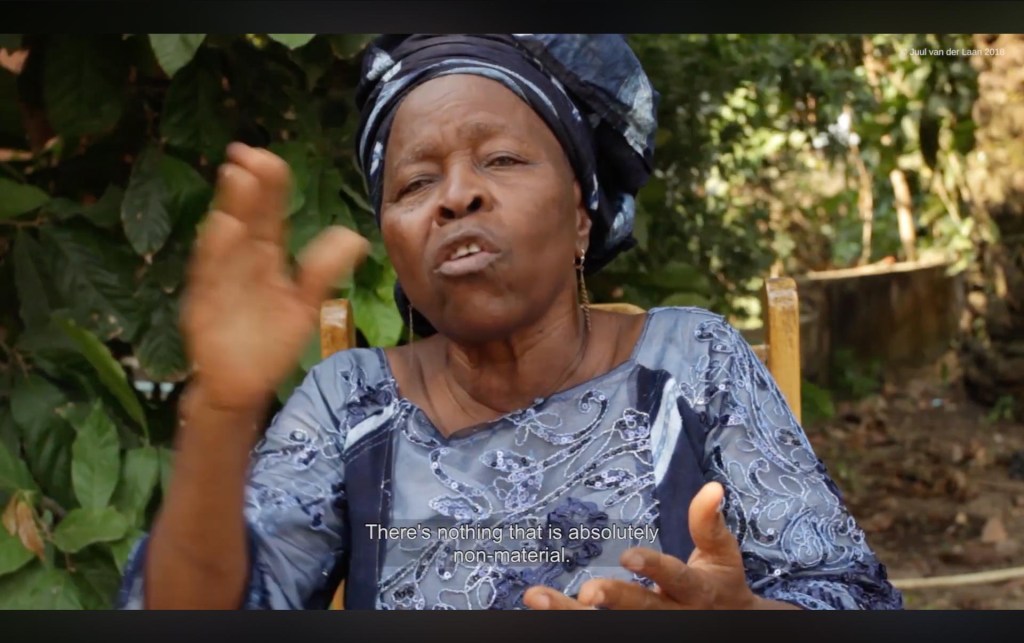
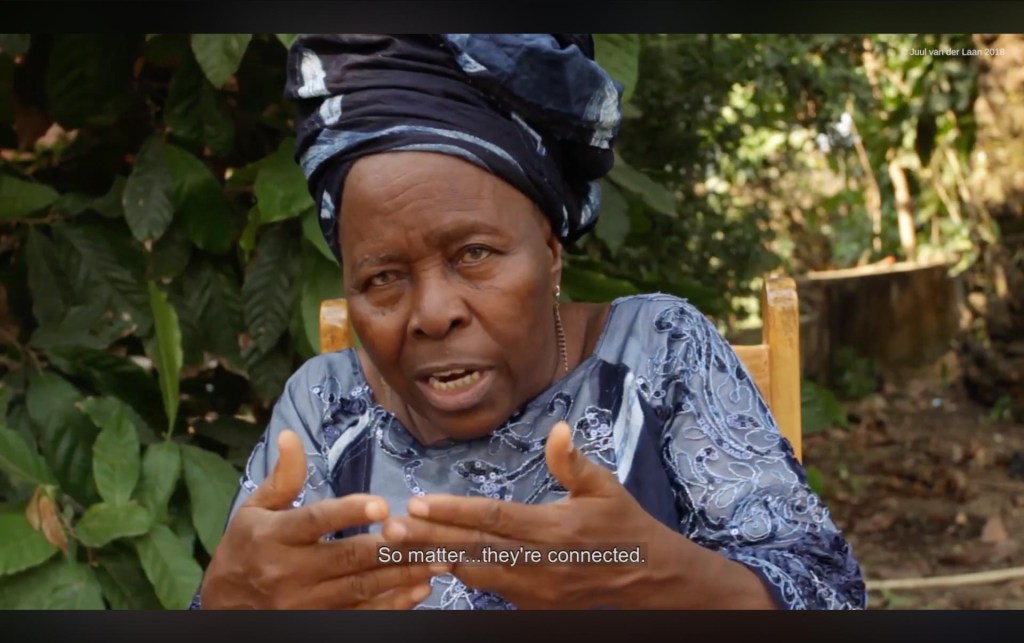
Yoruba Philosopher, Sophie Bọ́sẹ̀dé Olúwọlé, on Reality

Considering Flickr in the context of family memory
Flickr and other online visual repositories of memory made tangible showed me very quickly how I have, can, and will continue to use secondary collections to speak back and speak to my own archive and communal archives! I found it most strategic to be very nosy on Flickr! By this I mean I followed marks of metadata, captions, and followed accounts who liked pictures to find niche albums and collection galleries across the web. This was often a better way to find more specific images rather than typing up purely “ Nigeria in 1970s” and rather using the cultural context clues based on what is depicted in the image like advertisements, types of car, and other motifs that mark time.
As I searched in key words of interest, surprised by what did or or did not appear in the search bar, I quickly learned how metadata and captions are used to describe a people, place, and time or to mislabel a people, place, and time. In looking through Flickr’s collection uploaded by users all across the world, through this sharing and swapping of material I have been gifted with new curiosity, standards, values, and ultimately guidance on how I would like to care for my own lineage’s image and story. More specifically, I am a lot more intentional, protective, and curious on how and where I want my own archive and family archive to live on outside of myself.
This thinking process of intentionality is connected to my learning of an ancestor on my paternal side, Baba Frank Awosiika, was the primary photographer in Ondo town Nigeria in the early 1900s-late 1970s. With Baba Frank being the first photographer to open the day and night photo studio and darkroom in my family’s hometown. My learning of Baba Frank was made known to me by a series of conversations with my Big Daddy Dipo while I parsed through his photographic archive, learning that images of my grandfathers on my maternal and paternal side were largely photographed by Baba Frank. In this, I also learned that Baba Frank and my maternal grandfather, Baba Mosebolatan Johnson Akinwande, worked 3 shops away from each other and also had a close relationship and was frequently imaged by Baba Frank. In addition, many of the images of my Grandpa John were imaged by Baba Frank. Upon learning this, I was ECSTATIC. I discovered so much more that I plan to share with care and dignity and respect over time! In the time it took for me to learn this story, I am committed to letting this story reveal itself to me, bit by bit, and learning the way Baba Frank and my ancestors would like this story to be revealed to others.
All good things take time and are built with care and intention. As an image maker and archivist, I am committed to not replicating the harmful history and present of photography, when used as a way of stripping the spirit and humanity out of the individuals within an image for the sake of building an “archive.” In this commitment I must always consider whether or not I am engaging in a life-giving and spiritually-aligned archival practice to prevent the extortion of one’s history, told with speed and without care to the real lives connected to the images presented to the world.
Research is a calculated place where you and I meet
You and I
I and an Idea
A seed for the past and present
A seed you my child, not yet made tangible, dwelling above, waving hello
Anticipating the meeting of you and I!
In Yoruba cosmology and faith practices, Earth is referred to as the marketplace. It is in this marketplace one’s spirit is assigned a mission to fulfill and experience for elevation. In this marketplace I often think about the ways we as people are in constant performance. Performance of being and unbeing. The contradictions of self and unself, body and spirit, and right and wrong, binaries and extremes.
As I think of my own performance within research: the act of performing research, conducting research, and presenting this scanning ritual process video. I am grateful to this performance of life, performance of what it means to live within the marketplace of life, Earth, and looking at images within Flickr’s collection along with the images revealed to me within the last 8 months of my research fellowship revealed to me even more performances within my family’s personal photographic archive. Many of these photographs that I began to immerse myself in came long before I came into frame (‘the marketplace’) and many that came after. In these performances photographs traced between the early 1950s and late 2000s I found myself asking lots of questions of the people within these images, the conversations they may have been having, the music they may have been listening to, the life led of each person who took each photo, wondering what led them to the camera, and the things not pictured in the photographic frame and every single gesture and performance that led to the image made.
On Gratitude and Looking Ahead
Thank you for indulging into the peak of this performance with me. Thank you to my friends, families, mentors, peers, loved ones for indulging into the everyday research of life and conversation with me. You all are a part of this performance with me and I am grateful to you all.
Thank you to the Flickr Foundation team, Tori and George especially, for your deep care and guidance within this process.
I will be traveling to Nigeria next month and will be initiating the second phase of my project within my family archive and film where I will be conducting more oral history and filming of my hometown: Ondo, Nigeria. I give homage to the long line of forest dwellers within my blood and carry their blood within my own and it is my duty to uplift them with every step I take in this life. To dwell within the past and present, all at once!
—————————————-
To keep up with my exploration ancestral exaltation and veneration through visual material and homage, bookmark my website.
Over time I will be presenting information and findings along with tools and resources for folks who may be interested in starting family/community archival projects. Please feel free to reach out to me via my personal website to get in contact if you have any questions and/or would like to speak more! I love to yap and share <3
With the warmest regard in my spirit,
Oreoluwa Ifamodupe Akinyode