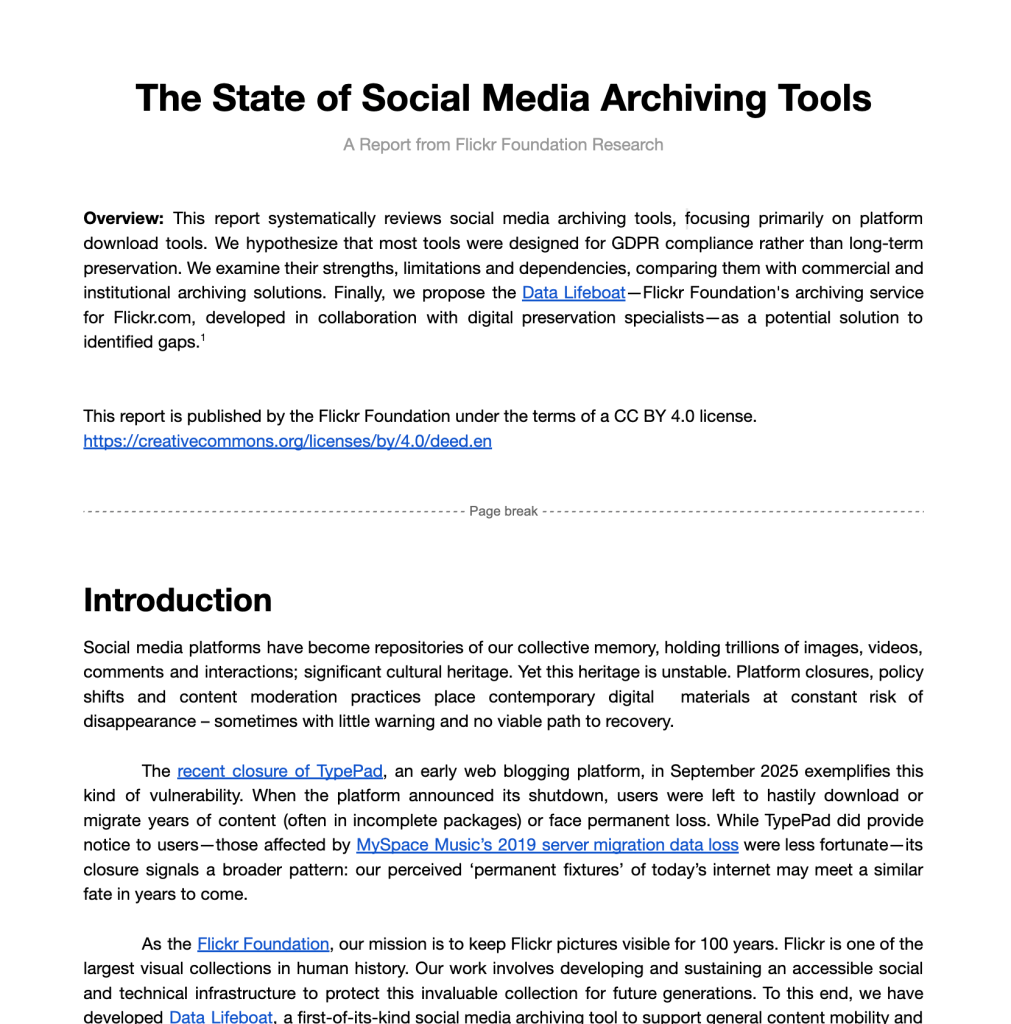
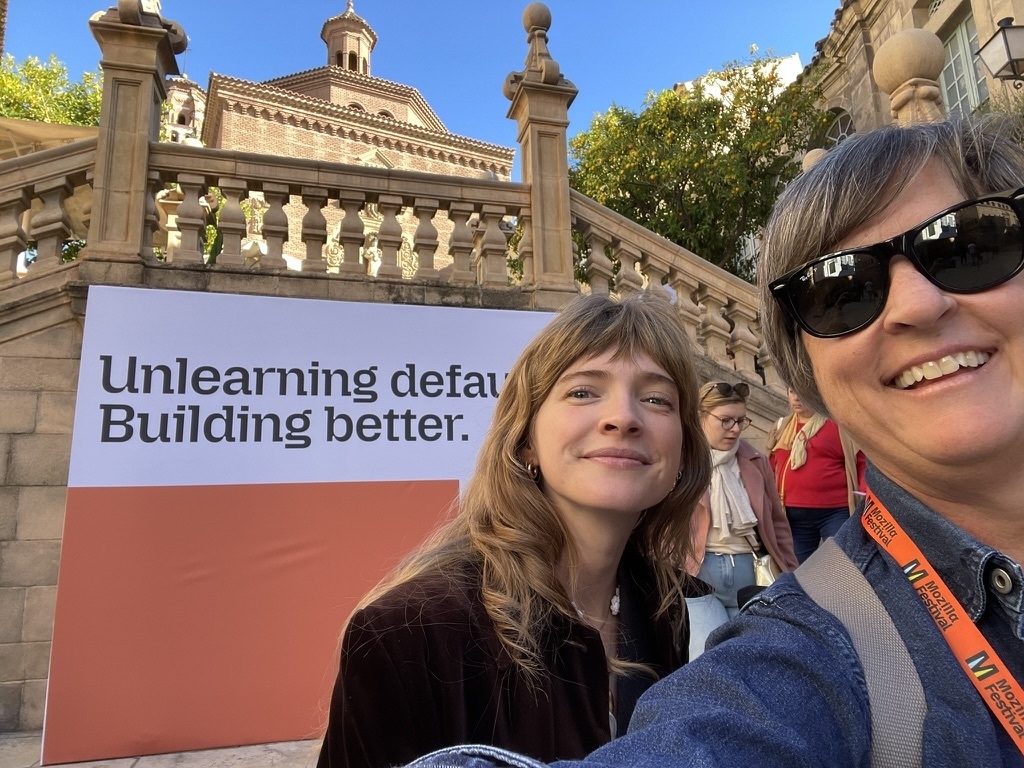
Tori and George headed to Mozilla Festival in Barcelona, the annual theme of which was Unlearning, to talk Digital Legacy in the age of social media. Convening a workshop with a fascinating mix of participants, they discussed what responsibilities platforms hold to digital legacy, what can be done about it and how we ought to treat different types of data.
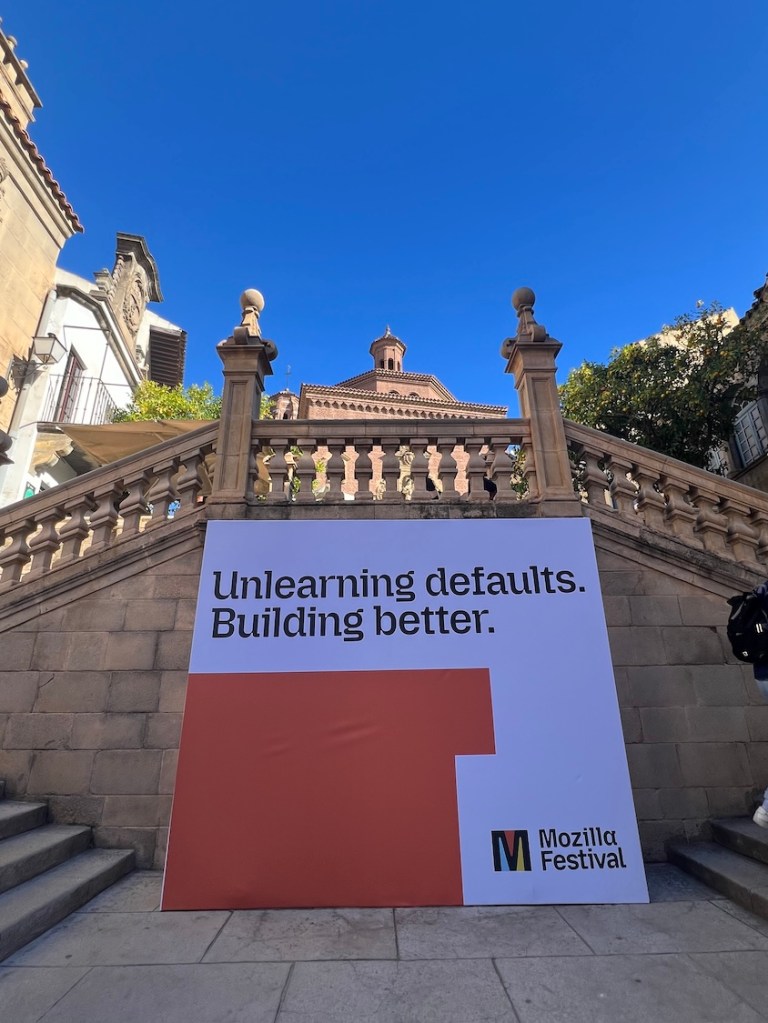
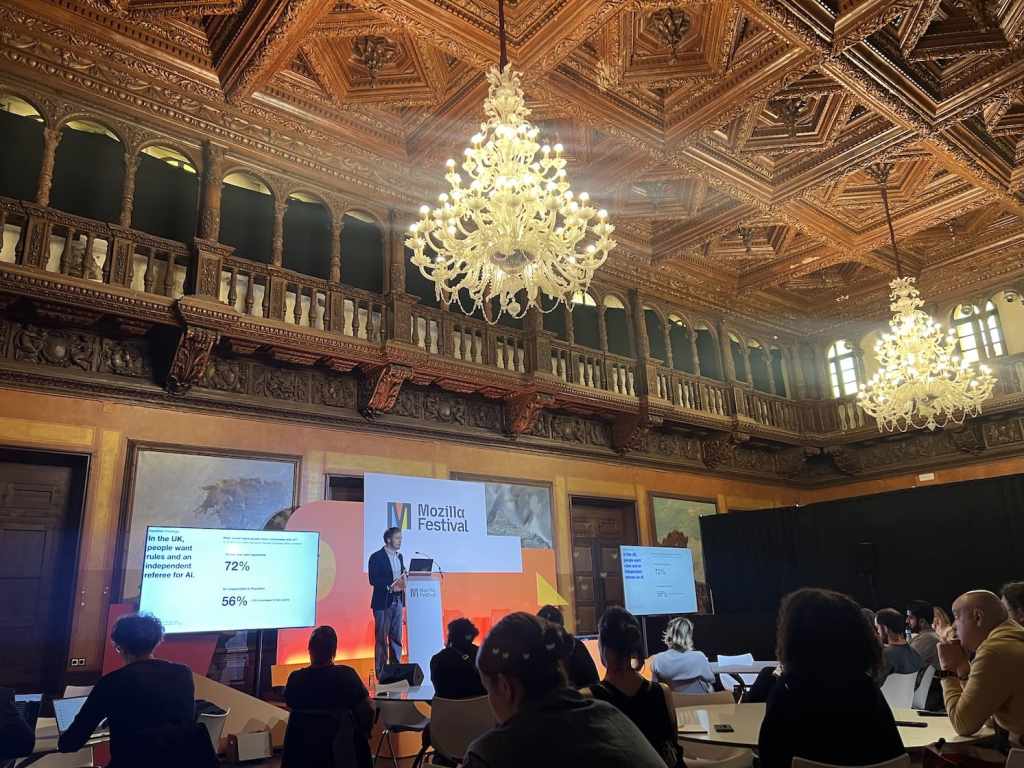
Last week Flickr Foundation had the pleasure of being an official partner of and hosting a workshop at Mozilla Festival in Barcelona. Hosted at Poble Espanyol, a microcosmic maze of buildings showcasing local Spanish architecture, built for the World Fair in 1929, it was very unlike your typical conference venue.
We convened to discuss the future of digital legacy, trying to understand what this means to people in the age of social media. As more of our memories live online (amidst a flurry of social interactions), we need to build better tools and frameworks to manage these for the long-term. We’ve already started doing this with Data Lifeboat — our archival tool for Flickr photos – but we know we need to go further. From our Sunday morning workshop, where we spoke with artists, technologists, dancers, journalists and producers, the following insights emerged:
- The social aspect of “who am I leaving this for” plays a significant role in determining legacy practices (and often the answer isn’t clear).
- Have we lost the collective reflective moment of the photo album?
- We need digital legacy tools that allow for the compartmentalisation of content types to preserve living permissions of who gets to see/access what. How should we treat different data types?
- Sometimes, it’s more important to preserve the idea or the mission rather than the content (or code) itself — allowing for further replication by future viewers and makers. How might we facilitate collecting and preserving ideas from the digital?
- Could there be creative ways we might visualise the network of connections (a sort of ‘social graph’) that ought to be easy to uncover via our networked social lives online? This feels like a unique piece of historical evidence that we’re creating unconsciously every day.
You’re welcome to review the slides from our workshop.
It’s encouraging that a community is growing around these challenges. There’s Identity 2.0, the London studio working on making better digital futures and the landscape of digital memories, or Ian Forrester (Cubicgarden), working on Machine Readable Wishes as a method for making proactive determinations on what to do with your digital things before you pass away.
Additionally, some of our highlights of the festival included:
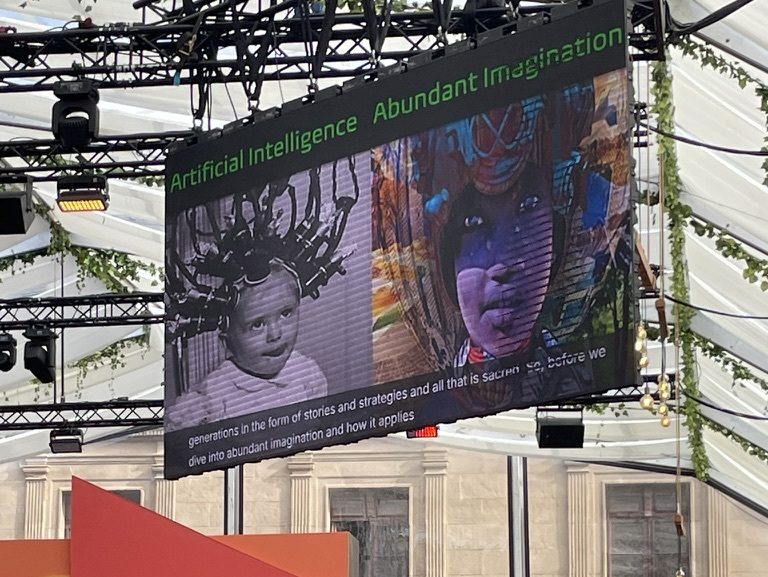
- Dr Ruha Benjamin’s keynote (available to watch on YouTube) redefined possibility as the radical act of imagination. The need to be both critical and creative to break through the propulsion of Big Tech and the biases they have baked into our digital worlds:
“Admit that computational depth without social and historical depth ain’t that deep”
- Internet Exchange’s session on feminism and encryption, cohosted by Chayn and Superbloom. The panelist emphasised how privacy doesn’t mean the same thing for everyone. Certainly we need better education around these seemingly over-technical tools but also to build software that allows for flexibility of these technologies, that better replicate IRL networks of care and community in the online world (in contrast to exclusively individualised models).
- Taysir Mathlouthi’s rousing session on preserving evidence of social media harms for Palestinian activists. Their talk spoke to the value of decentralised digital archival tools in recording injustices and preserving them for “when the time is right” to seek recourse. They also showcased their brilliant grassroots tool, 7or, for documenting platform-based violations and censorship.